
How to Attract Birds to Your Garden
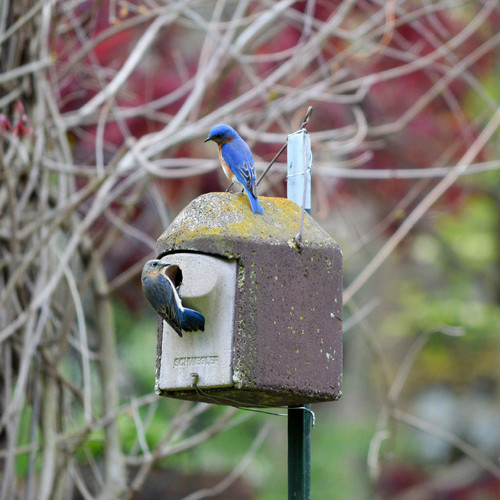
A garden full of birdsong is not luck. Birds settle where four things are met: food, water, shelter, and safety.
Provide all four and they will find you, often within days of a new feeder going up, and they will pay you back with color, song, and quiet pest control all year. Kinsman has supplied birdhouses and feeders for more than forty years, from Schwegler nest boxes made in Germany to hummingbird feeders made in Missouri. Here is what to put out, where to put it, and how to keep the birds that come safe from squirrels, predators, and windows.
What birds need from your garden
Birds return to a garden that reliably offers four things, and almost everything below is about providing them well.
Food
A feeder is the fastest draw, and the food you choose decides which birds arrive.
Water
A place to drink and bathe attracts birds that never touch a feeder.
Shelter
Nest boxes and dense planting give birds cover and somewhere to raise young.
Safety
A garden that protects birds from windows, cats, and predators is one they stay in.
Offer the right food
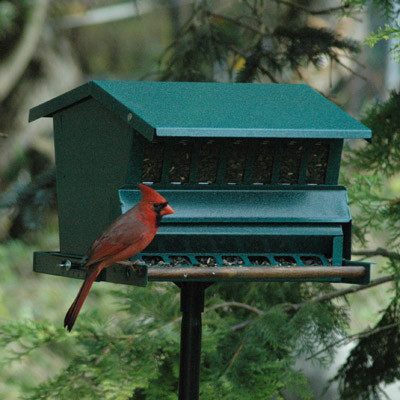
The quickest way to bring birds in is a well-stocked feeder, and the seed you choose decides which birds arrive, as the table below shows.
Kinsman's feeders cover each of these, from tube feeders for nyjer and sunflower to the Sky Cafe, a Bluebird Mealworm Feeder, three-sided window feeders, and hummingbird feeders made in Missouri. Whatever you hang, keep the food fresh and top it up consistently so birds learn to rely on it.
Shop bird feeders and houses| Put out this food | And you will attract |
|---|---|
| Sunflower & mixed seed | Cardinals, chickadees, nuthatches, and many more |
| Nyjer (thistle) seed | Goldfinches and other finches |
| Mealworms | Bluebirds and robins that ignore seed |
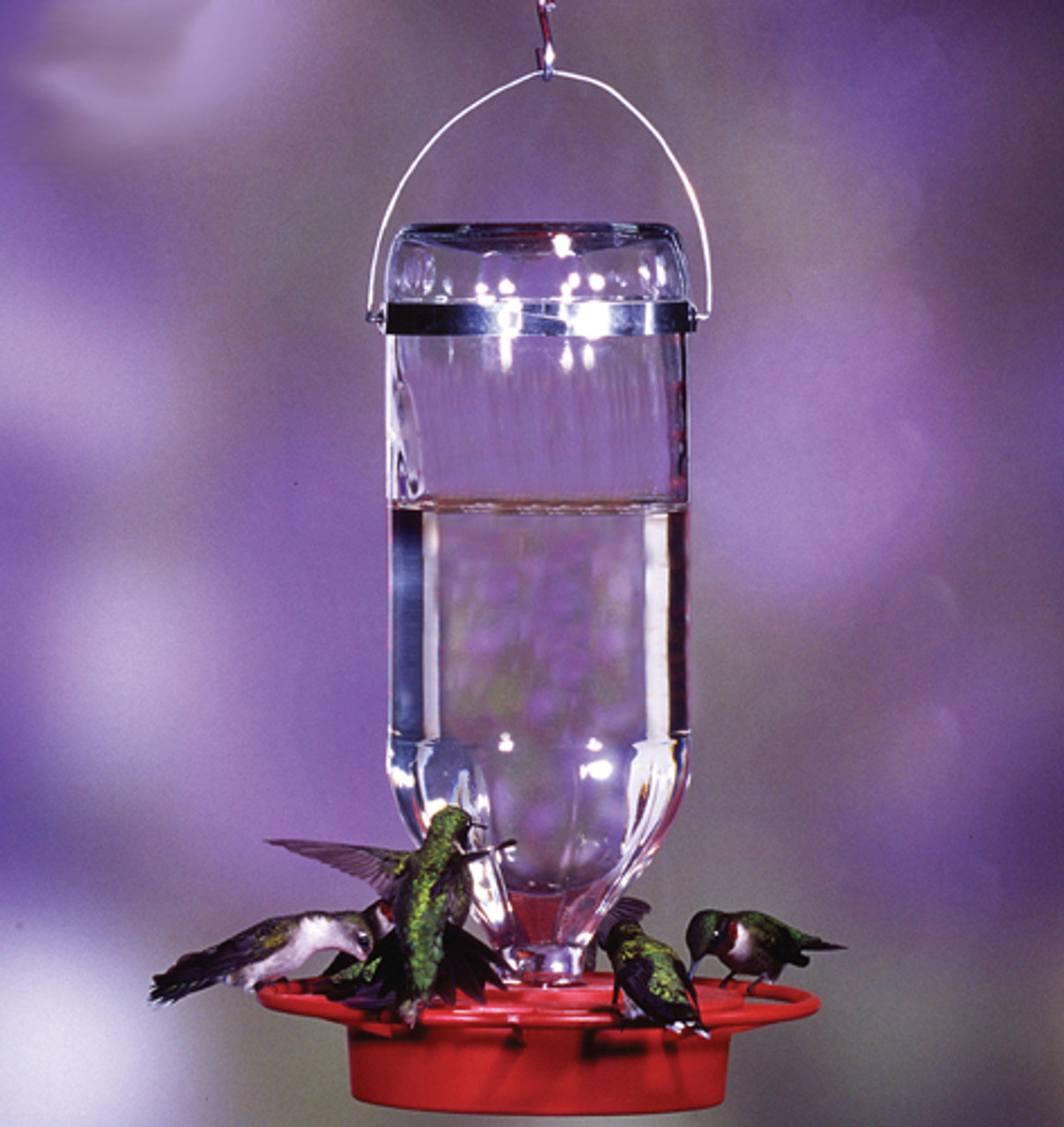
| Sugar nectar | Hummingbirds |
Keep squirrels off your feeders
Squirrels are the most common feeder problem, and the fix is a combination of the right feeder and the right placement. A weight-activated feeder closes off the seed ports under a squirrel's weight while staying open for lighter birds; Kinsman carries the Absolute Squirrel Proof Feeder and the Squirrel Buster Classic, both built on that principle. Placement matters just as much: mount a feeder at least five feet off the ground and if possible, eight to ten feet from any launch point such as a fence, branch, or roofline, or fit a baffle on the pole to block the climb. For nest boxes, Kinsman's Schwegler houses are made to resist squirrel and raccoon damage, so the birds inside stay protected too.
Shop feeders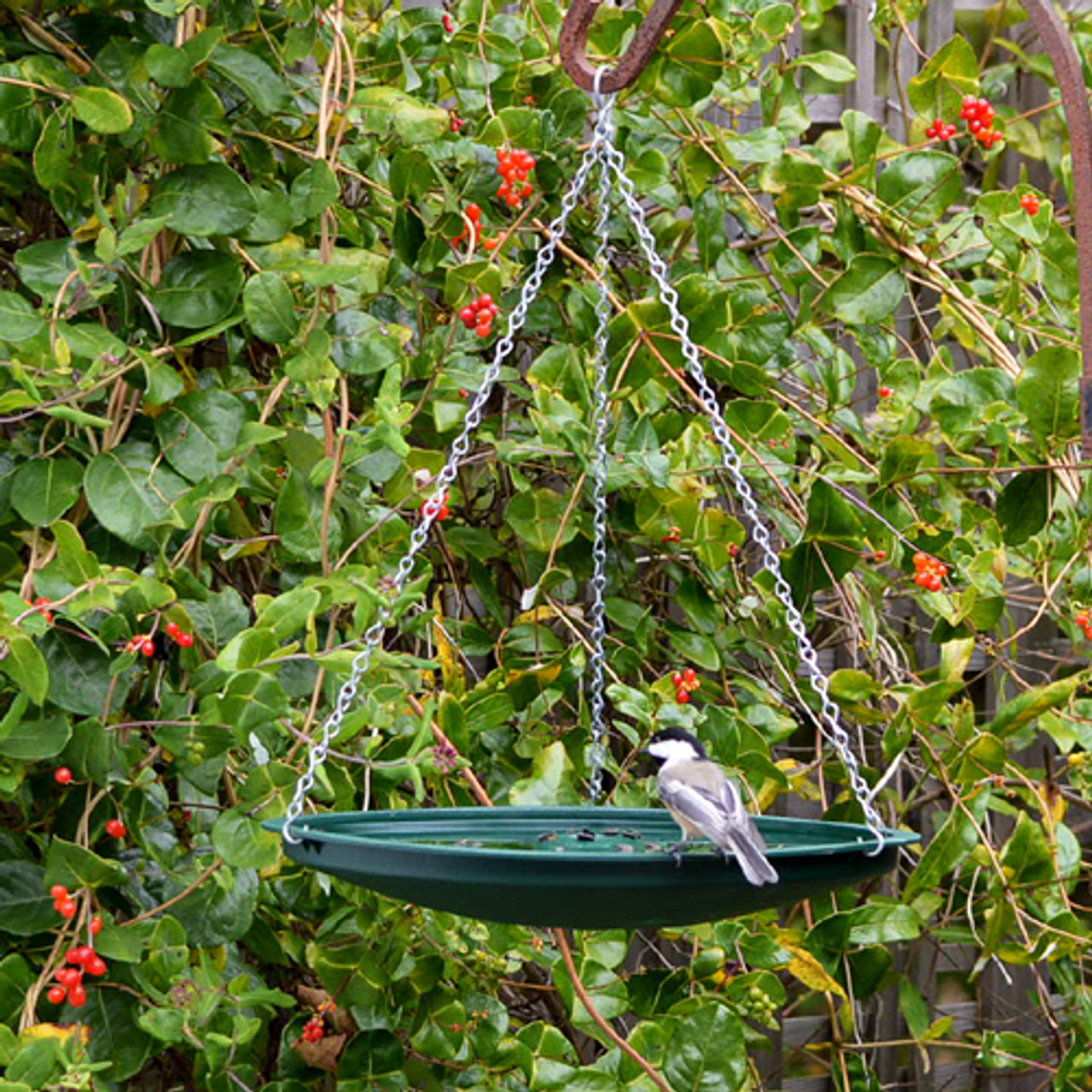
Provide fresh water
Water brings in birds that a feeder never will, because every bird needs to drink and bathe whether or not it eats seed. A shallow, clean source of water is enough: a bird bath that is easy to reach, easy to refill, and shallow enough for a small bird to stand in. Keep it topped up and clean, and pay it special attention in the heat of summer and the freeze of winter, when open water is hardest for birds to find. Kinsman's hanging bird bath gives them a safe place to safely drink up off the ground.
Shop bird baths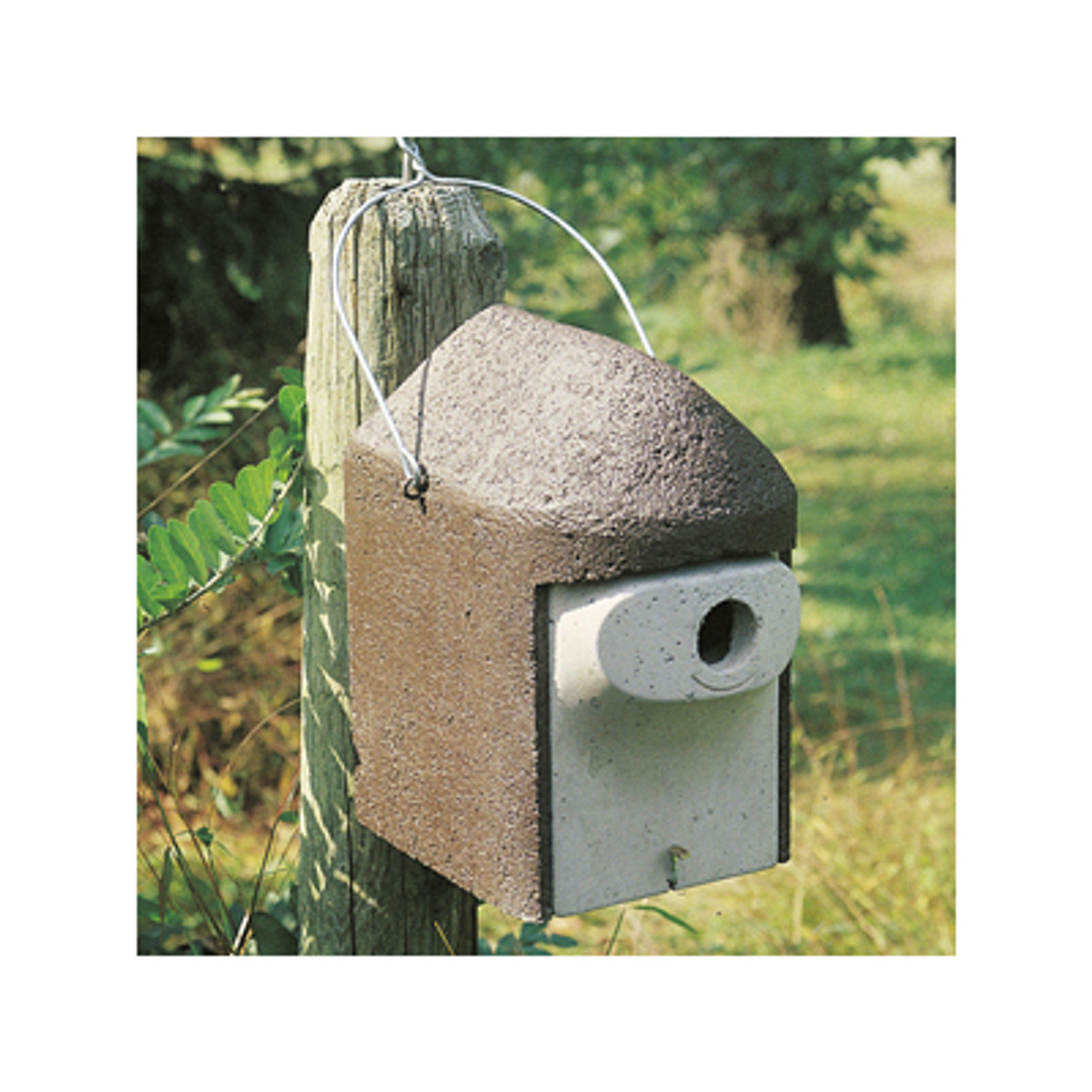
Give them shelter and a place to nest
A nest box replaces the old tree holes that most gardens no longer have, and the size of the entrance hole decides which birds will use it. As a general guide, a 1 1/4 inch hole suits smaller birds such as wrens and chickadees, while a 1 1/2 inch hole opens the box to bluebirds, titmice and other slightly larger species. A smaller hole also keeps larger, more aggressive birds out.
Kinsman's Schwegler birdhouses are the ones to build a garden around. They are made in Germany from a baked blend of about 75% pine sawdust and burnt clay, a material that breathes like wood but is completely rotproof and lasts twenty years or more, finished in a non-toxic brown paint that sheds water. The entry holes are sized for American birds, several models are made predator proof, and a removable front panel makes them easy to clean.
Shop Schwegler birdhouses
Make your garden safe for birds
Two garden dangers undo a lot of good feeding, and both are easy to address. The first is glass. Birds cannot see a clean window and collide with the reflection of the sky or the garden, often fatally. Breaking up that reflection with visible markers is the fix, which is what window alert decals do; Kinsman offers Window Warning Decals in butterfly, hummingbird, leaf, snowflake, and maple designs that blend with the window while telling birds the glass is there.
The second danger is predators, cats above all. Keep feeders and nest boxes away from the dense, low cover a cat can hide in, give birds a clear sightline, and choose predator-proof nest boxes with the correct hole size and no perch below the entrance, since a perch only helps a predator reach in. Small choices like these decide whether the birds you attract actually thrive.
Shop window warning decals“The best bird gardens offer four simple things: food, water, shelter, and safety.”
Garden for birds, not just feed them
The strongest bird gardens feed birds through the way they are planted, not only through a feeder. Leave seed heads standing into the fall instead of cutting everything back, grow berrying shrubs and trees for natural food and cover, and go easy on pesticides so that the insects and caterpillars birds feed their young have a chance to survive. Supporting the wider web of garden wildlife helps the birds too. Mason bees, for example, are gentle native pollinators that never sting and keep the whole garden productive. A living, layered garden is what turns occasional visitors into residents.
Explore the full wildlife rangeA simple seasonal rhythm
Feed year-round rather than only in winter, since birds come to depend on a reliable source and need energy in every season, including the breeding months. Clean feeders every couple of weeks so damp seed and droppings do not spread disease. Clean nest boxes twice a year, once after the breeding season in September and again before it in early March. Keep water available and unfrozen through the winter. Do these few things and a garden that birds pass over becomes one they call home.
Shop the wildlife range
Everything featured in this guide.
Frequently Asked Questions About Attracting Birds
-
What food attracts the most birds?
Black-oil sunflower seed and good mixed seed attract the widest range of garden birds, including cardinals, chickadees, nuthatches, and woodpeckers. Nyjer, or thistle seed, is the best choice for finches such as goldfinches, mealworms bring in bluebirds and robins, and sugar nectar draws hummingbirds. Offering more than one food widens the range of birds that visit.
-
How do I keep squirrels off my bird feeder?
Use a weight-activated feeder that closes the seed ports under a squirrel's weight, such as the Absolute Squirrel Proof Feeder or the Squirrel Buster Classic, and place it well. Mount the feeder at least five feet off the ground and if possible, six feet from any fence, branch, or roofline a squirrel can jump from, or add a baffle to the pole. The right feeder plus the right placement solves almost every squirrel problem.
-
Where should I place a bird feeder?
Put a feeder where birds feel safe and you can see it: within about ten feet of a tree or shrub for quick cover, but not so close that a cat can hide right beside it. Keep it away from windows, or within three feet of the glass, since both distances reduce the risk of fatal window strikes. Keep the area clean and the food fresh so birds return.
-
What size entrance hole should a birdhouse have?
The hole size decides which birds use the box. A 1 1/4 inch hole suits smaller birds such as wrens and chickadees, while a 1 1/2 inch hole admits titmice, bluebirds and other slightly larger species, while helping to keep larger, aggressive birds out. Kinsman's Schwegler houses come with entry holes sized for American birds.
-
How do I stop birds from flying into my windows?
Birds collide with glass because they see the reflection of the sky or garden rather than a barrier, so the fix is to make the glass visible. Apply window alert decals or other closely spaced markers to break up the reflection; Kinsman's Window Warning Decals come in several nature-themed designs that do this while blending with the window. Markers on the outside of the glass work best.
-
When should I clean bird feeders and nest boxes?
Clean feeders roughly every couple of weeks, and more often in wet weather, to stop damp seed and droppings from spreading disease. Clean nest boxes twice a year, once after the breeding season in September and again before it in early March. Kinsman's Schwegler houses have a removable front panel that makes this easy.