
The Complete Guide to Garden Structures: Obelisks, Trellises, Arches, and Arbors
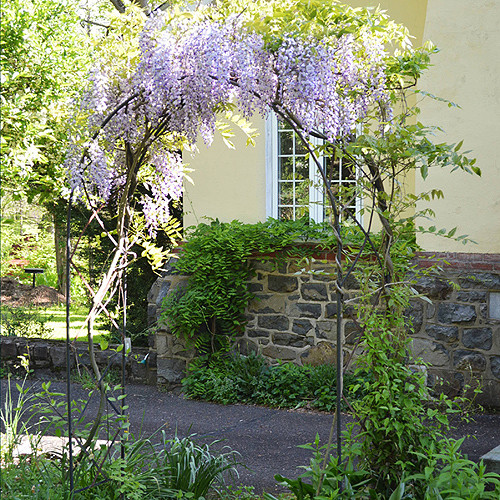
Garden structures are the pieces that give a garden its shape and its height. A well-placed obelisk, trellis, arch, or arbor supports climbing plants, draws the eye upward, and holds a border together through every season.
Kinsman has designed and sold garden structures for more than forty years, most of them made from strong steel to a classic, European-inspired style. This guide explains what each structure does, how they differ, and how to choose the right one for your garden.
Why add a garden structure
Flowers and foliage fill a garden at ground level. Structure is what gives it a third dimension. There are four jobs a garden structure does well, and most pieces do more than one at a time.
Support climbing plants
Roses, clematis, honeysuckle, and sweet peas all want a strong, lasting frame instead of a flimsy stake.
Add vertical interest
Height breaks up a flat bed and keeps the eye moving. A single obelisk can lift an entire border.
Frame a view or entrance
An arch over a path tells you where to walk and turns a gap in a hedge into a proper doorway.
Give year-round presence
A steel structure still looks intentional in January, long after the annuals are gone.
Obelisks & tuteurs
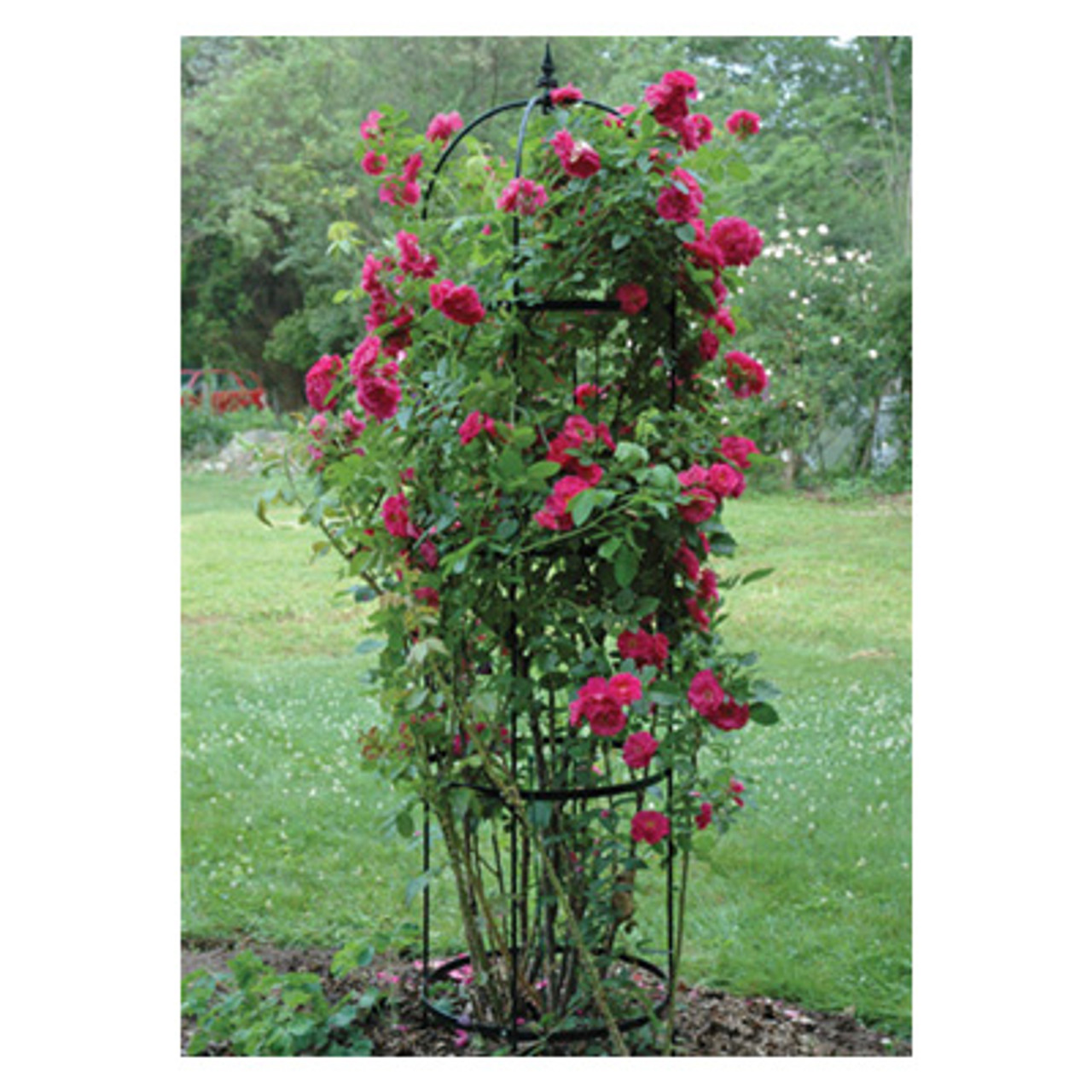
An obelisk is an upright, tapering support that stands on its own in a border or a large container. A tuteur is the same idea by its French name. The terms are used interchangeably, so the choice is about style and size, not function.
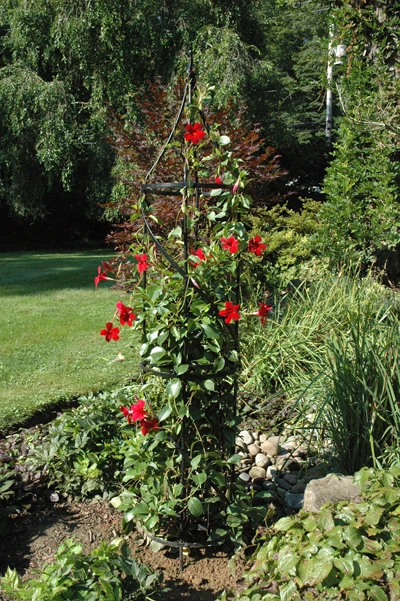
Kinsman's are made from solid steel and powder coated. The Rose Pillar Obelisks come in four sizes from 62 inches, with solid steel rod uprights and flat steel bands, all powder coated black. The Border Tuteurs run a little taller and come powder coated in a choice of black or green. Plant a clematis or climbing rose at the base and the obelisk carries the display up where you can see it.
Shop obelisks & tuteurs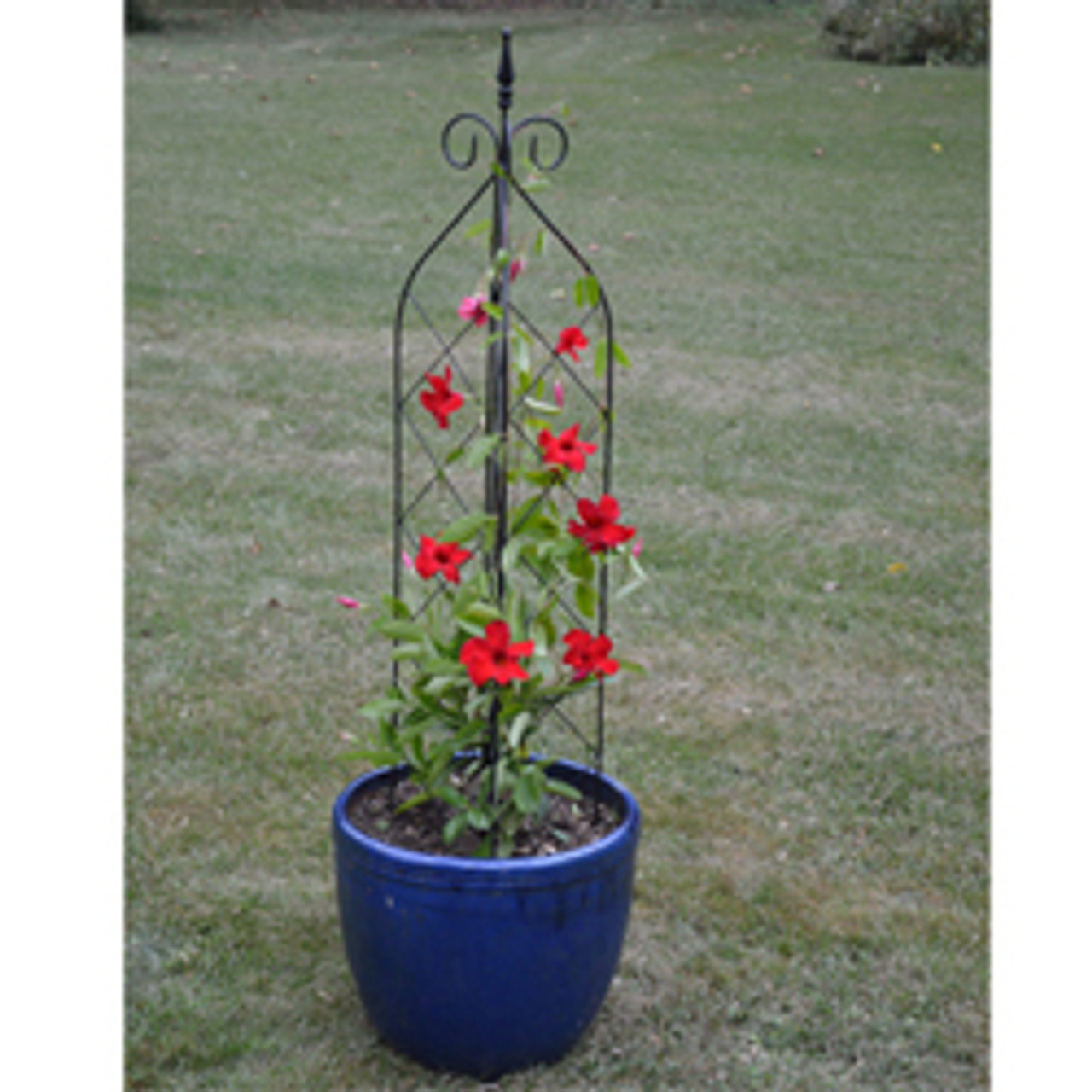
Trellises
A trellis is a flat, open framework that supports climbing plants against a wall, fence, post, or the back of a large container. Where an obelisk stands in the round, a trellis works in one plane, ideal for softening a bare wall.
Kinsman's trellises use an open, three-way diamond pattern in all steel with a black powder coating, from a small 41 inch up through a jumbo size, plus a green Downspout Cover Trellis to hide a downspout behind greenery. They suit clematis, jasmine, ivy, flowering annual climbers, as well as climbing edibles like peas and beans.
Shop trellises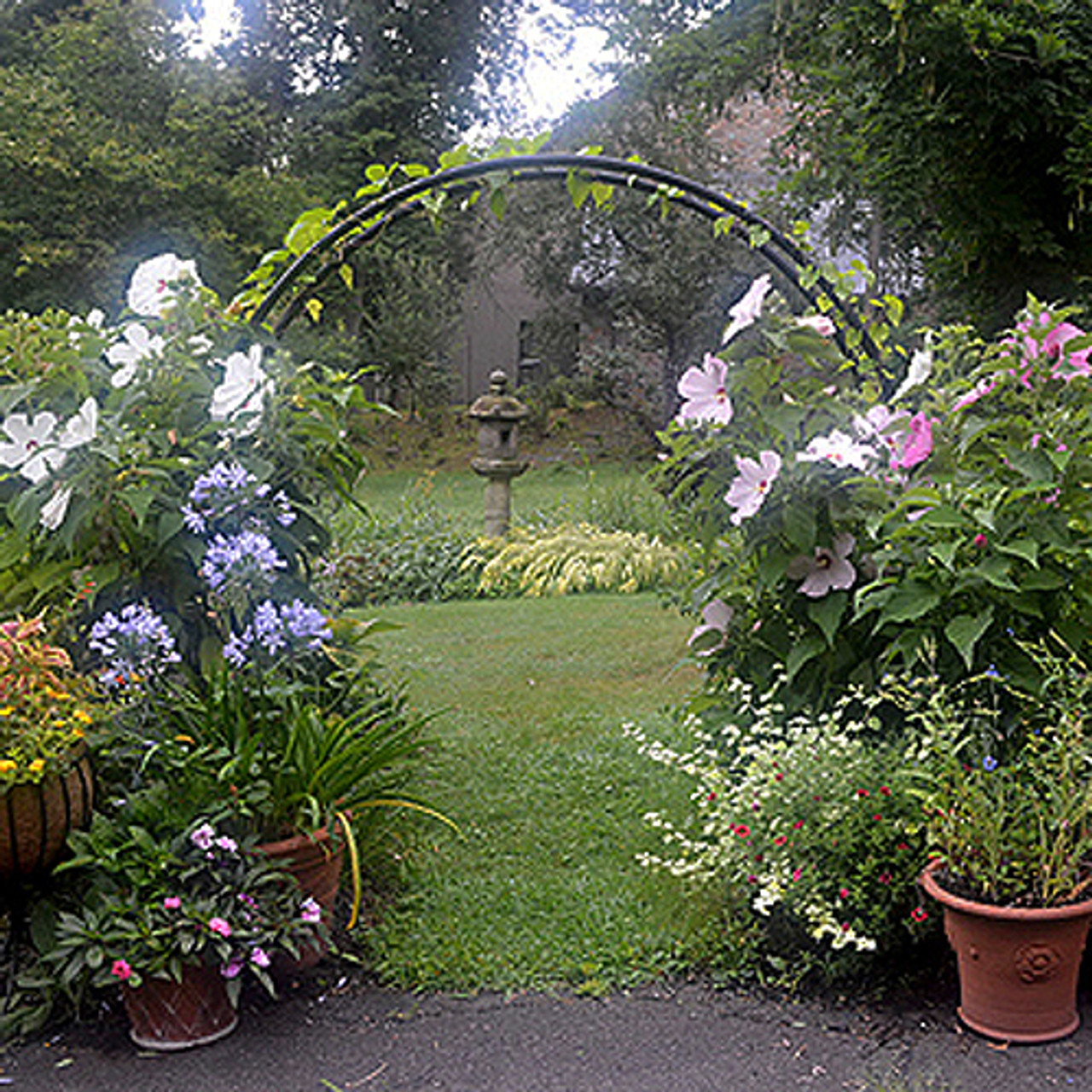
Arches & arbors
- An arch is a single overhead span you walk through to frame a path or mark an entrance.
- An arbor is an arch with depth and sides, a shaded nook that often holds a seat.
- A pergola is larger and flat-topped, shading a longer path or seating area.
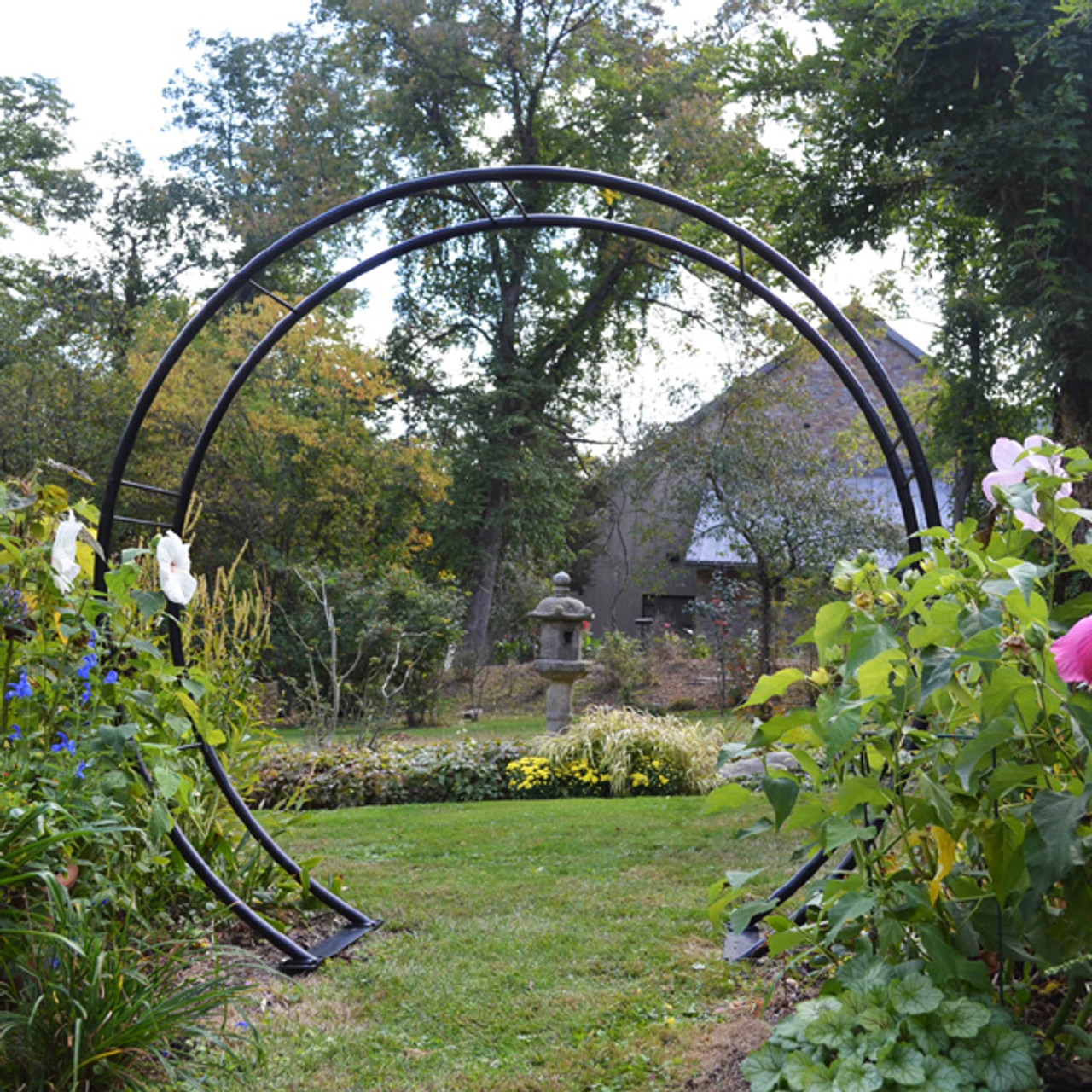
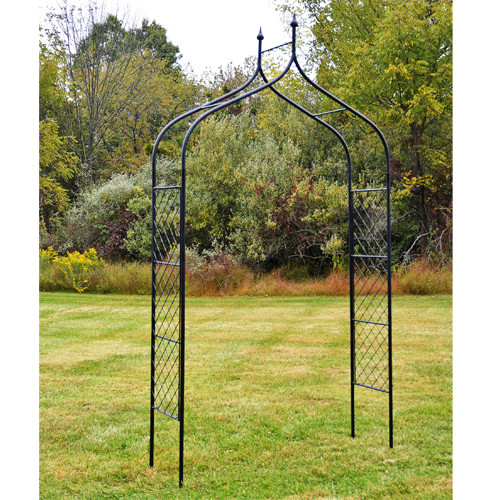
Kinsman's are built from solid steel. The Solid Rod Arches carry a black powder coating; the circular Moon Gate Arches come in 84 and 108 inch sizes. These frames suit the vigorous climbers: rambling roses, honeysuckle, and wisteria.
Shop arches & arbors“Chosen well and placed with intent, a single obelisk or arch does more for a garden than another tray of annuals ever will.”
How to choose the right structure
Start with the job you need done, then match the structure to it. This table is the quick version.
| Structure | Best for | Classic plants |
|---|---|---|
| Obelisk / tuteur | A freestanding vertical accent in a border or large container | Clematis, climbing roses, sweet peas |
| Trellis | Flat support against a wall, fence, post, or downspout | Clematis, jasmine, ivy, flowering annuals, edibles |
| Arch | Framing a path or an entrance you walk through | Climbing roses, honeysuckle, clematis |
| Arbor / pergola | A shaded seat or a longer covered walk | Wisteria, roses, vigorous climbers |
The most common mistake is undersizing. A vigorous rambling rose will swallow a small obelisk and needs an arch or a substantial tuteur. Match the scale of the structure to the vigor of the plant, and anchor it firmly before the planting matures and starts to catch the wind.
Materials & longevity
All of Kinsman's garden structures are made from strong steel and are powder coated. Steel keeps a rigid line, does not sag under weight, and a powder-coat finish keeps it looking intentional for years. It is a considered purchase rather than a throwaway one, which suits a piece meant to be part of the garden's permanent structure.
Shop the structures in this guide
Explore the pieces featured above.
Frequently Asked Questions About Garden Structures
-
What is the difference between an obelisk and a tuteur?
In practice, very little. An obelisk is an upright, tapering, usually four-sided plant support topped with a finial, and a tuteur is the same kind of structure by its French name, from the word for a plant trainer. The terms are often used interchangeably, so the real choice is about style, size, and finish rather than a difference in function. Kinsman offers both Rose Pillar Obelisks and Border Tuteurs in a range of sizes.
-
What is the difference between a garden arch, an arbor, and a pergola?
An arch is a single overhead span you walk through, used to frame a path or mark an entrance. An arbor is an arch with depth and usually sides, forming a small shaded nook that often holds a seat. A pergola is larger and flat-topped, a run of posts and cross-beams that shades a longer path or seating area. All three support climbing plants; the difference is scale and whether you pass through it or sit under it.
-
What can I grow on a garden obelisk, tuteur, or trellis?
Obelisks, tuteurs, and trellises suit climbing plants that twine or scramble, including clematis, climbing roses, sweet peas, jasmine, ivy, and flowering annual climbers. Trellises also work well for climbing edibles such as peas, pole beans, and cucumbers. Match the vigor of the plant to the size of the structure: a dainty clematis is happy on a mid-sized obelisk, while a heavy rambling rose needs a larger frame or an arch.
-
Do Kinsman garden structures rust?
Kinsman garden structures are made from strong steel and finished with a black powder coating that helps them resist the weather. A powder-coated steel finish is far more durable outdoors than a light, uncoated support. For the longest life, keep the finish intact and touch up any deep scratches.
-
What size garden arch do I need?
Choose an arch tall and wide enough that plants can grow over it without crowding the people walking through. As a guide, allow comfortable headroom once a climber hangs down from the top. Kinsman's Moon Gate Arches come in an 84 inch size (84 inches tall by 89 inches wide) and a larger 108 inch size, so you can match the arch to the width of your path and the scale of the setting.
-
How do I keep a garden obelisk or arch from blowing over?
Anchor it before the plant matures, because a full climber catches a surprising amount of wind. Set obelisks and arches firmly into the ground at the depth the design allows, and secure wall trellises to the surface with fixings suited to your wall. The taller the structure and the fuller the planting, the more important a solid anchor becomes.